
Rich County Criminal Court Cases
Rich County criminal court cases are divided by offense level. Rich County Justice Court handles class B and C misdemeanors, infractions, county-code cases, and traffic matters within its authority. Its local counter is at 20 South Main in Randolph, and its published number is 435-793-2415. Utah District Court, within the First Judicial District, hears felonies and class A misdemeanors. First District work for this small county may be coordinated through Logan, so the Utah Courts directory should be checked before a trip.
The clerk, not the sheriff, is the custodian of the filed case. A sheriff report tells the agency's account of an event. The court file shows the charge selected by the prosecutor and what the judge later ordered. The official Rich County Justice Court page shows the local route.
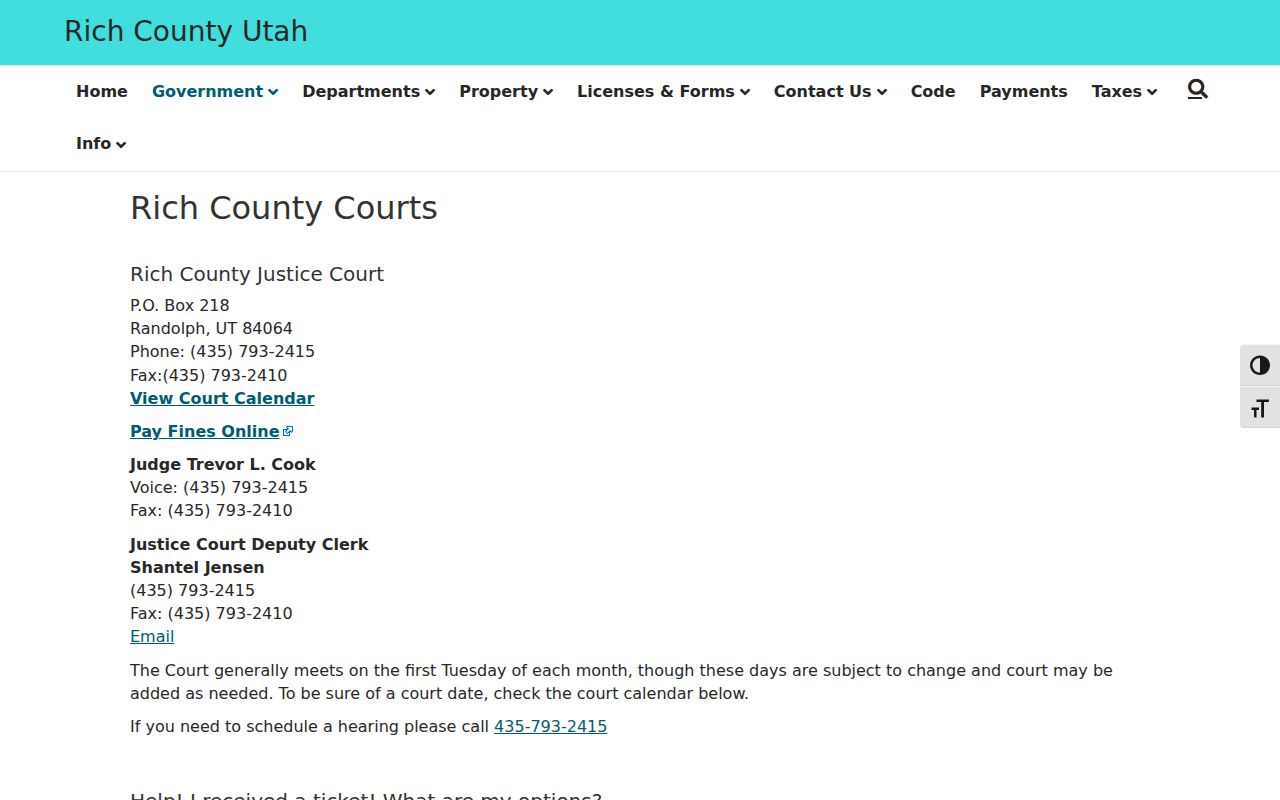
That local page is the right contact point for a justice-court citation or lower-level Rich County case, while felony records remain in the district-court system.
First District and Rich County Cases
The Rich County court level is not a small detail. It controls where a case is filed, which clerk can certify a copy, and which office can explain a missing document. The First District covers Rich, Cache, and Box Elder Counties. Rich County Justice Court is a separate court of limited jurisdiction. Juvenile matters serving Rich County also run through First District Juvenile Court services in Logan and are subject to strict confidentiality rules.
The Rich County Attorney prosecutes felony criminal matters for the county. A booking allegation can change when that office screens the evidence. Charges may be declined, reduced, amended, or filed in a form that differs from the jail entry.
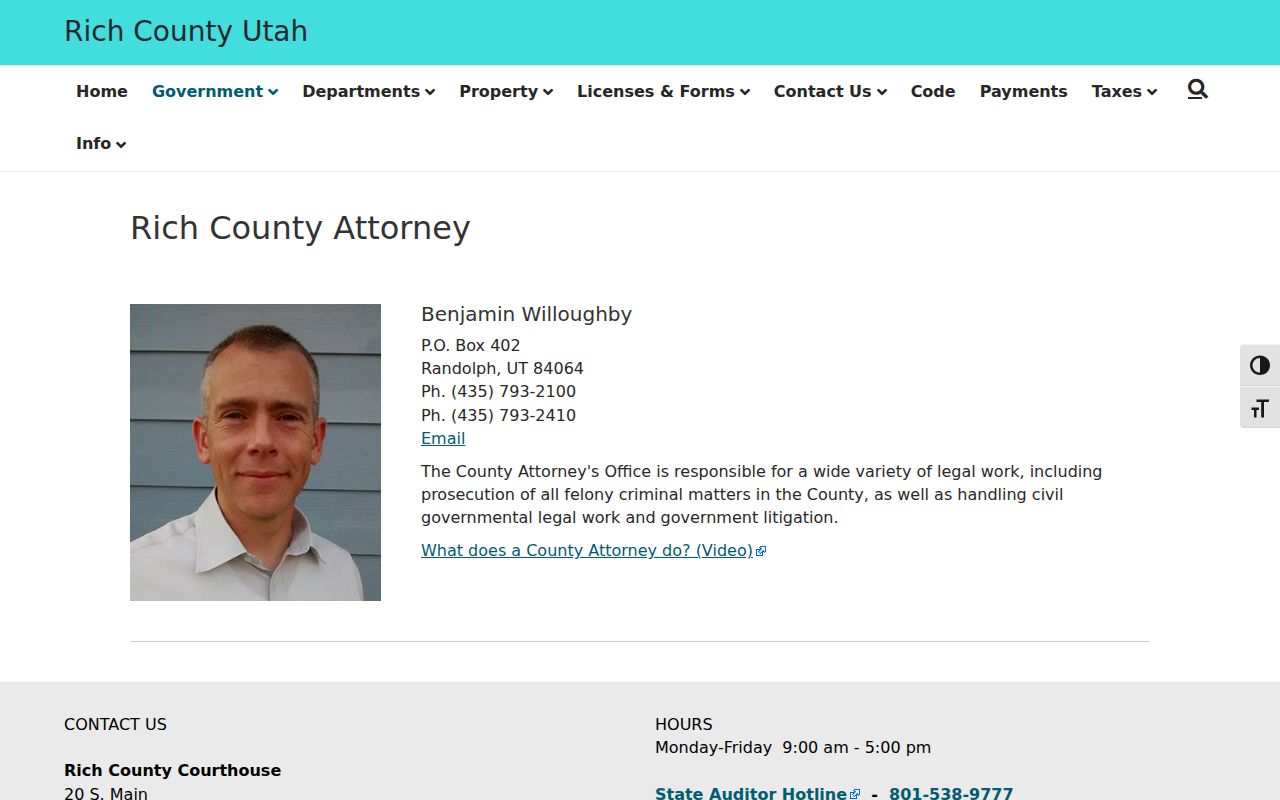
The official prosecutor page helps identify the filing office, but requests for docket papers, judgments, and certified orders still go to the proper court clerk.
Searching Rich County Case Records
Utah Xchange is the main statewide public search for Rich County criminal case records. Randolph coverage is complete for cases filed from June 26, 2000, while converted older data may be incomplete. Guest or account access can show summaries. Free public access is available at most district courthouses and the Utah State Law Library, but call before assuming a Randolph terminal is open.
- Gather the full legal name, likely filing year, court level, and case or citation number when known.
- Open Xchange and choose District, Justice, or both, then narrow the scope to Rich County or the likely court.
- Search by case number or party name. Use birth date, case type, and date range to separate similar results.
- Read the charges, amendments, chronological proceedings, disposition, and judgment as one record.
- Use the Utah Courts request channel for a filed paper, certification, or older item that the public summary does not supply.
The live Xchange interface displays the actual statewide route used for Rich County searches.
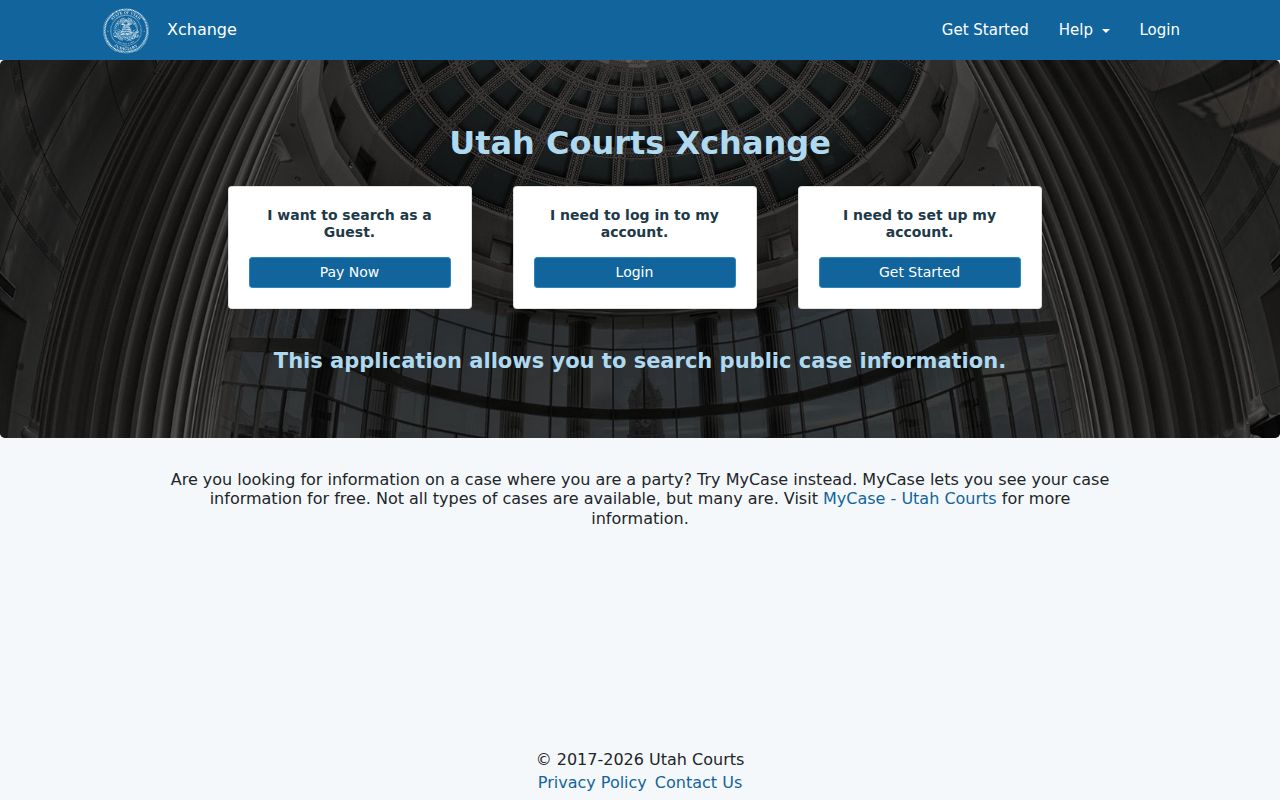
Rich County search results must be tied back to court, filing date, and other non-sensitive facts because a name alone is not enough to identify a case.
Xchange Fields for Rich County Cases
The official Xchange coverage guide explains that the repository includes district and justice court information, with nonpublic case categories excluded. Search controls allow a broad statewide check or a narrow Rich County query. Case numbers are not unique across Utah, and their first two digits identify the filing year. Court location remains a key check.
| Field label | Type | Required | Use |
|---|---|---|---|
| Jurisdiction | Selector | No | District, Justice, or both |
| Case number | Text | Alternative | Best route when the court and number are known |
| Last name/company | Text | Name route | Asterisk wildcards are supported |
| First name | Text | No | Narrows a party-name search |
| Case type | Selector | No | Limits results to a relevant category |
| Search scope | Selector | No | State, county, or court |
| Birth date | Date | No | Helps distinguish names when displayed |
| Citation number | Text | Alternative | Supports citation and location lookup |
The official Xchange guide also notes coverage, account choices, and access limits.
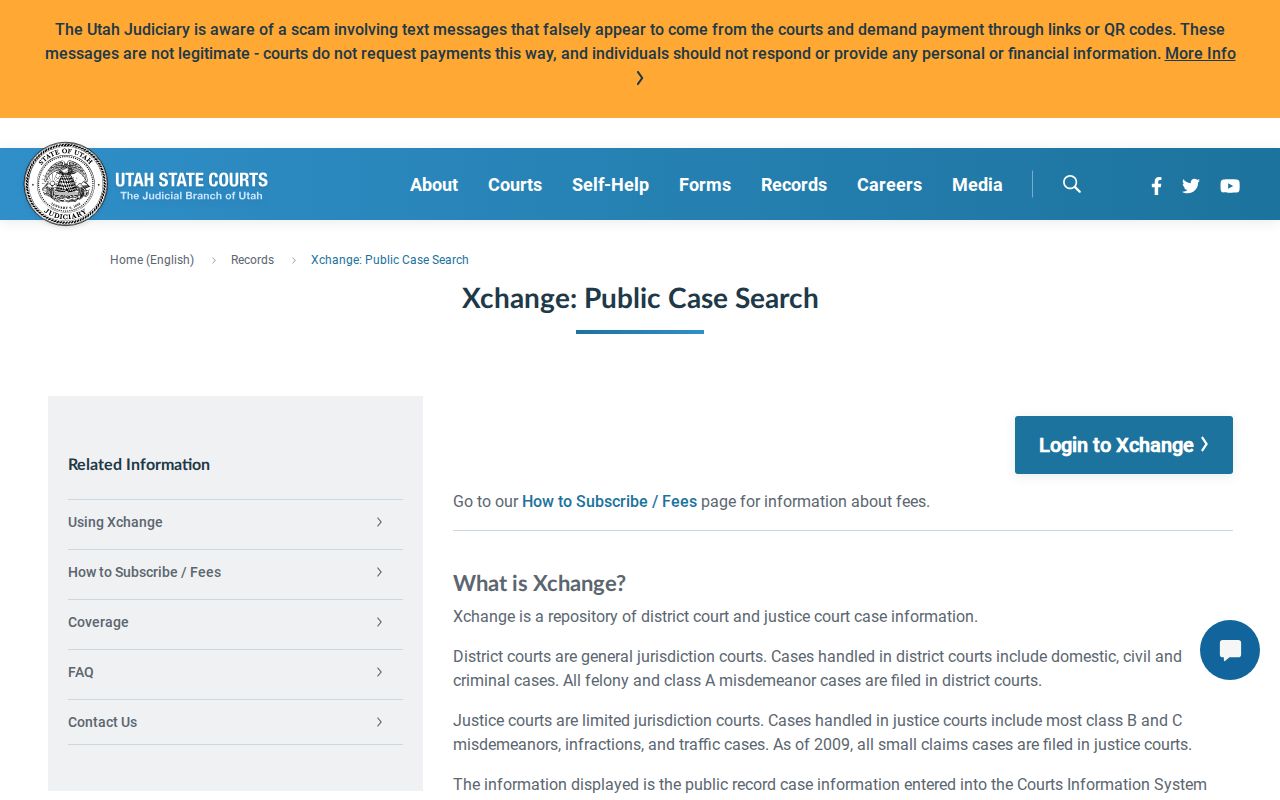
Those limits explain why an empty screen may call for a clerk request rather than the claim that no case exists.
Inside a Rich County Case File
A Rich County criminal case file connects the accusation to the court's final action. Public summaries can include the court and case number, filing date, status, parties and counsel, charges and severity, plea, disposition, judge, hearings, docket events, sentence, balances, and public document links. A Rich County docket label is only an index. Read the filed order when exact terms matter.
| Case Number and Court | Identifies the file, filing year, court level, and location. |
|---|---|
| Charging Document | States the offense filed by the prosecutor, which may differ from booking allegations. |
| Docket Entries | Lists filings, minute entries, hearings, and court actions in date order. |
| Plea and Disposition | Shows how each filed count was addressed and the date of that result. |
| Judgment and Sentence | Records the court's final terms, fines, restitution, custody, or supervision when public. |
| Document Access | Marks public papers that can be viewed or bought, subject to access rules. |
Note: Partial birth dates, victim details, protected addresses, and sealed or expunged material may be withheld from public display.
Rich County Docket Terms Decoded
Utah case codes help a reader sort Rich County criminal cases before opening the docket. FS means a state felony case. MD marks misdemeanor DUI, MO means another misdemeanor, and IF marks an infraction. NA is an administrative criminal action and may not be public. Outcome terms also need care.
- Dismissed
- The count ended without a conviction on that charge.
- Acquitted
- A trial ended in a not-guilty finding.
- Plea in abeyance
- A plea is held under statutory terms and can have a later result based on compliance.
- Disposition
- The recorded resolution of a charge, such as dismissal, plea, verdict, or other court action.
Do not treat a code as the whole outcome. A charge may be amended, and separate counts in the same Rich County case can end in different ways.
How a Criminal Case Moves
Law enforcement starts the event record, but a court case begins when the prosecutor files. An initial appearance addresses identity, the accusation, counsel, release, and the next date. Felony work may include preliminary-hearing issues before arraignment, followed by discovery, motions, plea talks, trial, judgment, sentence, and possible appeal. Not every Rich County case passes through every stage.
Case flow: Charges Filed › Arraignment › Pretrial › Plea or Trial › Disposition › Sentencing
The Utah Courts criminal-justice materials place each filing and hearing in that broader court process. The sequence explains why an early docket can show a pending accusation but no result.
Rich County Citation Posting Gap
Rich County warns that a citation may take five days to appear in the state ePayment system. If it is still missing, confirm the citation number and issuing court, then call Justice Court at 435-793-2415. The payment screen is not a complete criminal-case or warrant search. It is a narrow citation tool.
Justice Court usually sits on the first Tuesday, a local schedule detail that makes early contact useful. A person should not assume that an unposted citation was voided or that no hearing date exists. Ask the clerk which court holds it and what the filed record requires.
Case Record Access & Restrictions
Public Rich County court records are accessed under Utah's judicial record rules, not by using GRAMA as a substitute for the Rich County court system. Xchange excludes expunged, sealed, juvenile, criminal-NA, and other nonpublic matters. The public view can also omit protected identifiers and papers. An authorized party may have access that the public does not.
For a record not available online, use the Utah Courts record-request process. Posted statewide fees include paper at $0.25 per sheet, storage media at $15, and certified copies generally adding $4 per document plus $0.50 per page. Fax or email is $5 for ten or fewer pages, then $0.50 per page, when the item is not on Xchange. The first 15 minutes of staff time is free, with posted rates after that. Ask the clerk for a current estimate.
MyCase and Rich County Case Access
MyCase is for a participant's own eligible Utah cases. It can display case history and filed papers and can support document exchange after a case begins. It is not a public people search and should not replace Xchange for public Rich County case research.
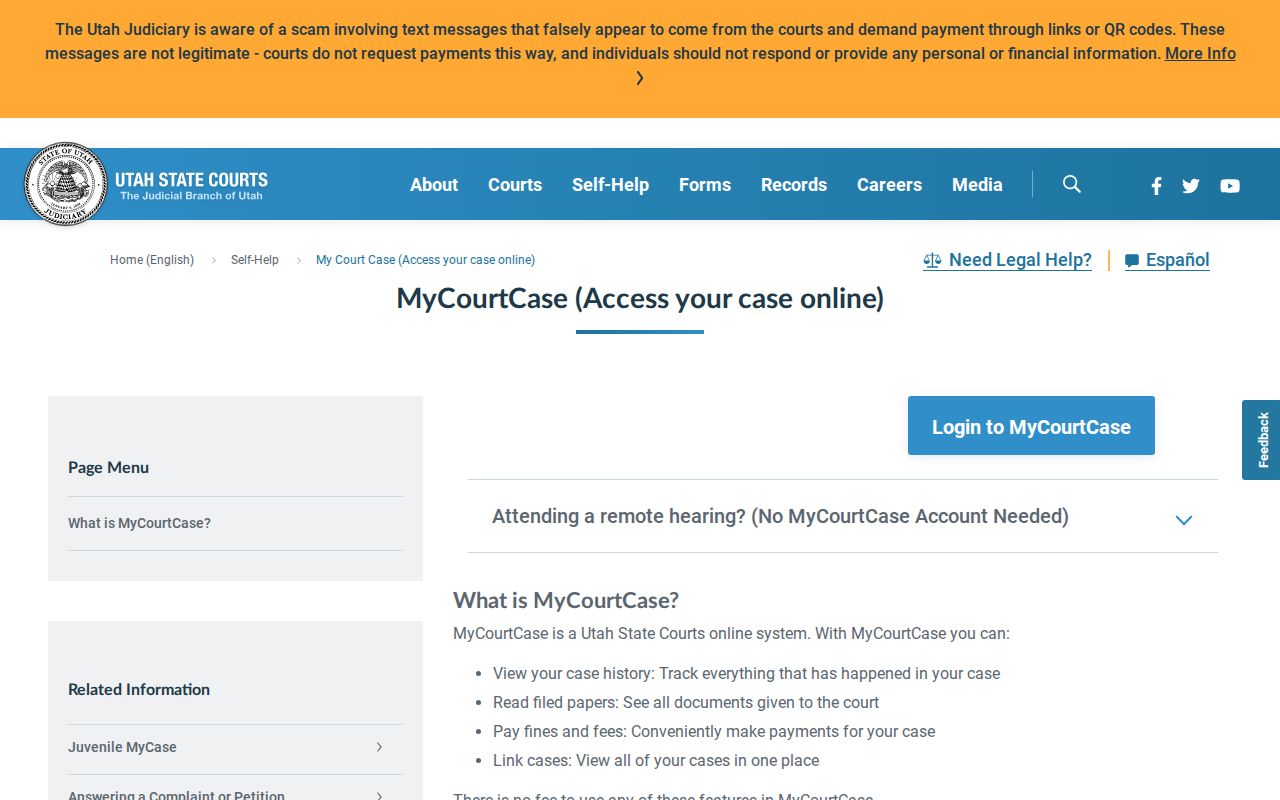
The distinction matters in rural Rich County: MyCase may save a participant a trip, while a member of the public still uses Xchange or asks the clerk for an accessible court record.
Rich County Expungement Orders
An eligible Rich County case can follow Utah's petition-based expungement process or, for qualifying matters, Clean Slate automatic review. Petition work starts with the official BCI eligibility route and ends in the court that decided the case. If no case was filed, the district of arrest controls. A signed order restricts routine government access; it does not mean every historic copy was destroyed.
The Utah Courts expungement workflow provides current forms and filing steps.
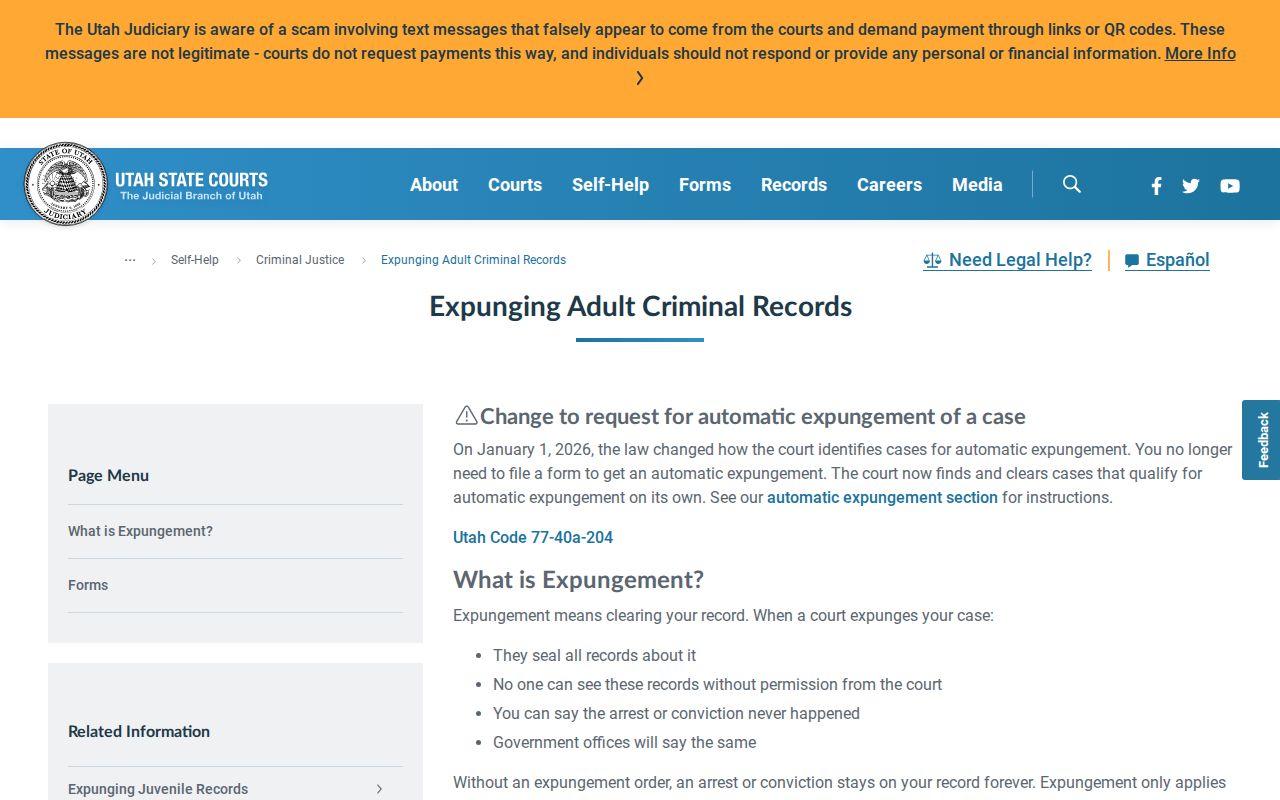
After an order, keep certified copies and verify the court and BCI displays because each custodian must process the result in its own system.