
Checking Criminal History in Laketown
Begin a Laketown record search by naming the Laketown event and the office that created it. The Laketown clerk handles municipal administration, but the clerk does not hold Laketown sheriff incident reports or court judgments. The Rich County Sheriff covers Laketown law enforcement. Rich County Justice Court and Utah District Court hold filed Laketown cases within their separate jurisdiction. Utah Xchange supplies the statewide public case-search layer for Laketown matters.
- For town minutes, ordinances, or municipal administrative records, contact Laketown at 435-946-9000 during its posted office hours.
- For an incident or arrest, call north-county dispatch at 435-946-3210 and ask which agency created the record.
- Request a sheriff report or past booking entry through records at 435-222-5977 and the county's June 2025 form.
- Search public court cases through Utah Xchange, then call Justice Court when a local citation remains absent after five days.
- Review your own official Utah criminal history through BCI subject access; there is no public name search for another person's BCI rap sheet.
Laketown Clerk or Sheriff Records
The fastest way to avoid a rejected Laketown request is to separate Laketown administration from law enforcement. The Laketown clerk can address municipal records created by Laketown. A Laketown accident report, call for service, arrest narrative, or booking file belongs with the agency that made or kept that record, usually the Rich County Sheriff in Laketown. A filed Laketown criminal charge belongs to the court rather than either records counter.
The official Laketown website identifies the town office at 10 N 200 E, Laketown, UT 84038, with 435-946-9000 and clerk@laketown.utah.gov. Its posted hours are Monday and Wednesday, 9 a.m. to 2 p.m. Those short windows matter. A caller who needs a sheriff report should not wait for the town counter, and a town-record requester should not send the matter to jail dispatch.
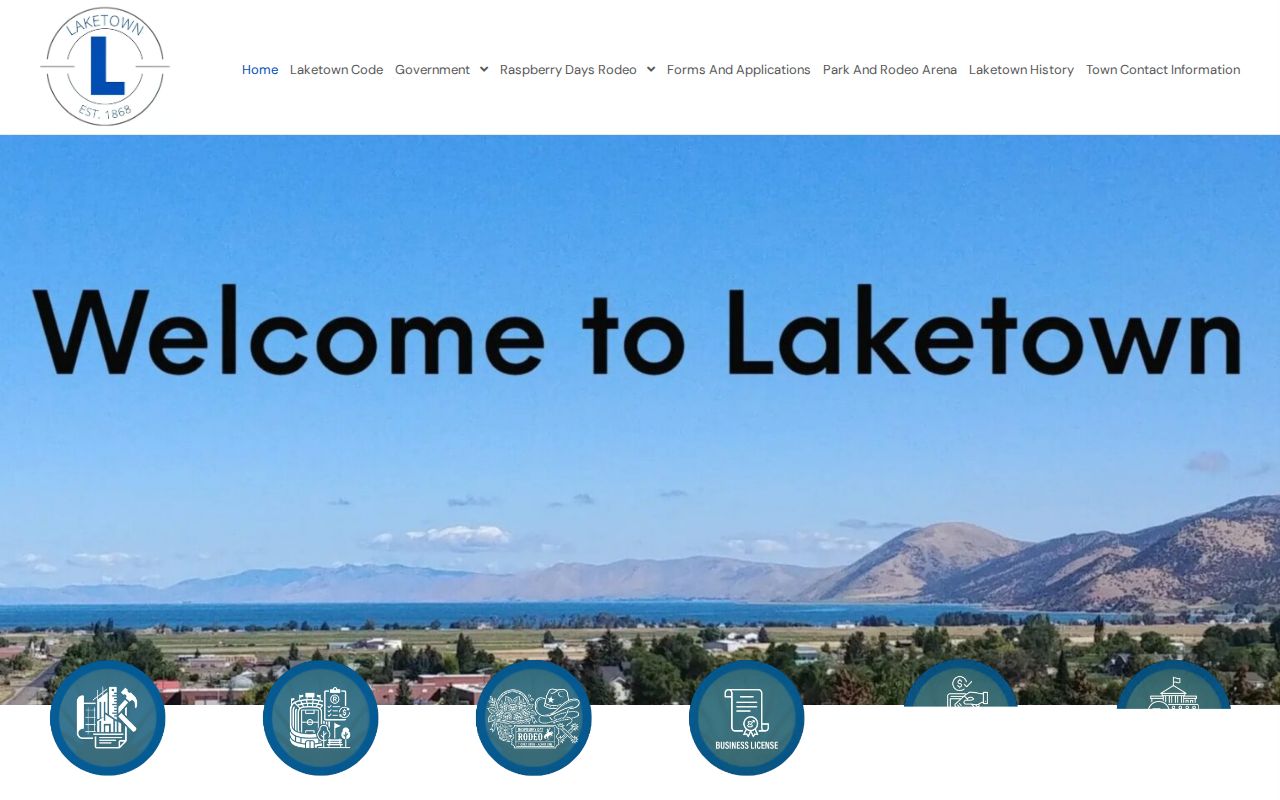
The Laketown website is the proper first source for current Laketown office details, while sheriff and court links remain the authority for Laketown criminal records.
A focused Laketown request also helps the custodian quote any fee before work begins. Laketown's town charges were not documented in the research, so confirm them with the Laketown clerk. Sheriff instructions are separate and list $35 for a GRAMA request, $25 for a police report, and $25 for a DI-9 accident report. Those newer figures differ from an older county ordinance. Ask the sheriff to explain the current Laketown charge and do not apply that schedule to a town or court file.
Laketown Police Department Records
No Laketown Police Department was identified in official Laketown or county sources. The absence of a Laketown police portal is therefore expected, not a sign that a private search vendor has the missing official Laketown file. The Rich County Sheriff's Office supplies the Laketown police function and publishes 435-946-3210 as the dispatch line for Garden City and Laketown.
Use 435-222-5977 for Laketown requests routed to the Sheriff's Records Department, Civil Process, and Office Secretary. The current Laketown request instructions accept submission by secretary@richcounty.gov or mail to P.O. Box 38, Randolph, UT 84064. They require one Laketown request per record, a specific description, contact information, and government photo identification. Laketown has no verified police app, report portal, warrant list, or local booking database.
Laketown Records and Limited Hours
Laketown's Monday and Wednesday office schedule creates a simple Laketown planning rule: call or email before travel. A request for a Laketown council record can wait for the clerk's window, but a current Laketown custody question should go straight to sheriff dispatch or the jail. Laketown court deadlines and hearing dates belong with the clerk of the assigned court. The Laketown schedule should never be described as the operating hours for those county services.
When submitting a Laketown GRAMA request, state the exact municipal record, date range, and preferred format. For Laketown sheriff files, use the sheriff's separate form. This division may feel formal in a community of Laketown's size, yet it protects Laketown accuracy because each custodian can search the record system it actually controls.
Laketown Arrests and Bookings
Laketown has no identified city lockup. A sheriff or other authorized officer takes a Laketown arrestee into the county custody process in Randolph. The Laketown arresting agency creates the incident or arrest report. Jail intake creates the Laketown booking entry, fingerprints, booking photograph, initial charge list, bond or hold facts, and release record. The prosecutor may later file different Laketown charges.
There is no official online Laketown booking log or mugshot gallery. Call 435-946-3210 for an immediate Laketown custody question or 435-222-5976 for jail administration. Use a focused Laketown records request for a past booking. Utah Department of Corrections Offender Search covers state prison, probation, and parole status, not a short Laketown jail stay. The Rich County arrest lookup explains those countywide layers in more depth.
Note: A booking proves custody at a point in time, not guilt or the final charge filed in court.
Laketown South-Shore Record Routes
Laketown sits on Bear Lake's south shore, and the Laketown location helps explain its designated dispatch number. The same county system also serves Laketown tourism and road activity beyond town administration. Before requesting a Laketown report, read the citation or paperwork for the agency name. A Utah Highway Patrol record belongs in the Utah DPS GRAMA portal, while a sheriff incident belongs with Rich County records. State Parks enforcement records use that agency's request channel.
This agency check is especially useful around recreation and the town's Pioneer Celebration, rodeo, and 5K. A Laketown setting does not by itself prove that the town clerk or sheriff created the file. Ask for the report number, date, location, and arresting or reporting agency. Then use the matching custodian.
Municipal Court Records in Laketown
No separate Laketown municipal court was found. Local lower-level criminal, traffic, infraction, and county-code matters within jurisdiction go to Rich County Justice Court. Felonies and class A misdemeanors belong to Utah District Court in the First Judicial District. Public summaries can appear in Xchange, and eligible citations may appear in the state ePayment portal.
The Justice Court is at 20 South Main in Randolph and publishes 435-793-2415. First District service for Rich County may be coordinated through Logan, so use the current Utah Courts directory before going to a district counter. Juvenile matters are confidential and follow the First District Juvenile Court route rather than Laketown's town office. This court split is the main reason a local name search can return only part of the case picture.
| Court Name | Rich County Justice Court; no Laketown municipal court identified |
|---|---|
| Case Types Heard | Class B and C misdemeanors, infractions, county-code and traffic matters within court authority |
| Case Lookup Channel | Xchange, citation ePayments, Justice Court at 435-793-2415, or Utah Courts record request |
| What the Docket Shows | Filed charge, case number, dates, status, hearings, events, plea, disposition, and sentence when public |
| Copies & Fees | Request from the assigned court under posted statewide judicial search, copy, and certification rates |
Laketown Citation Not Showing
A missing result in the Utah citation portal does not prove that a Laketown citation vanished. Rich County says citation entry can take five days. Check the citation number and named court, allow the stated posting window, and then call Justice Court at 435-793-2415. The payment portal is narrower than Xchange and is not a full warrant search.
If a public case appears in Xchange, read the filed charge, later amendments, docket, and final order together. A case number is not unique across Utah without its court context. MyCase is another option only for a participant viewing their own eligible matter. When a document is missing from the public summary, use the Utah Courts request channel instead of asking the town clerk for a court order.
Xchange lets a reader narrow by District, Justice, or both, along with case number, party name, case type, court scope, birth date, citation data, and date ranges. An asterisk wildcard can help with a party-name variation, but identity should be checked through more than a name. Search results top out at 500, and expunged, sealed, juvenile, criminal-NA, and other nonpublic cases are excluded. Home access may cost money, while free access is available at many district courthouses and the Utah State Law Library.
Where Laketown Records Go
A Laketown incident handled by the sheriff starts as a law-enforcement report. If there is an arrest, the county jail creates the booking file. A prosecutor's filing begins the separate case record, and the assigned court tracks hearings, pleas, disposition, and sentence. Fingerprint-supported arrest data and the court outcome may later connect within BCI's state criminal-history system.
Record flow: Rich County Sheriff › Rich County Justice Court or Utah District Court › Utah Department of Public Safety, Bureau of Criminal Identification
Use the sheriff or jail for the newest local facts. Use the court for what was filed and decided. Use BCI subject access to inspect your own Utah repository record. A Laketown criminal records search is most accurate when these sources are compared by case number, court, agency, and date rather than by name alone.
Laketown Crime Data in Context
The official Crime in Utah reports are the proper starting point for broad local statistics. Rich County's sheriff is the reporting agency for this small jurisdiction. The state warns that blank NIBRS fields after 2021 can mean an agency did not report, not that no crime occurred. A Laketown reader should therefore keep the year, reporting agency, covered population, and completeness notes beside any number.
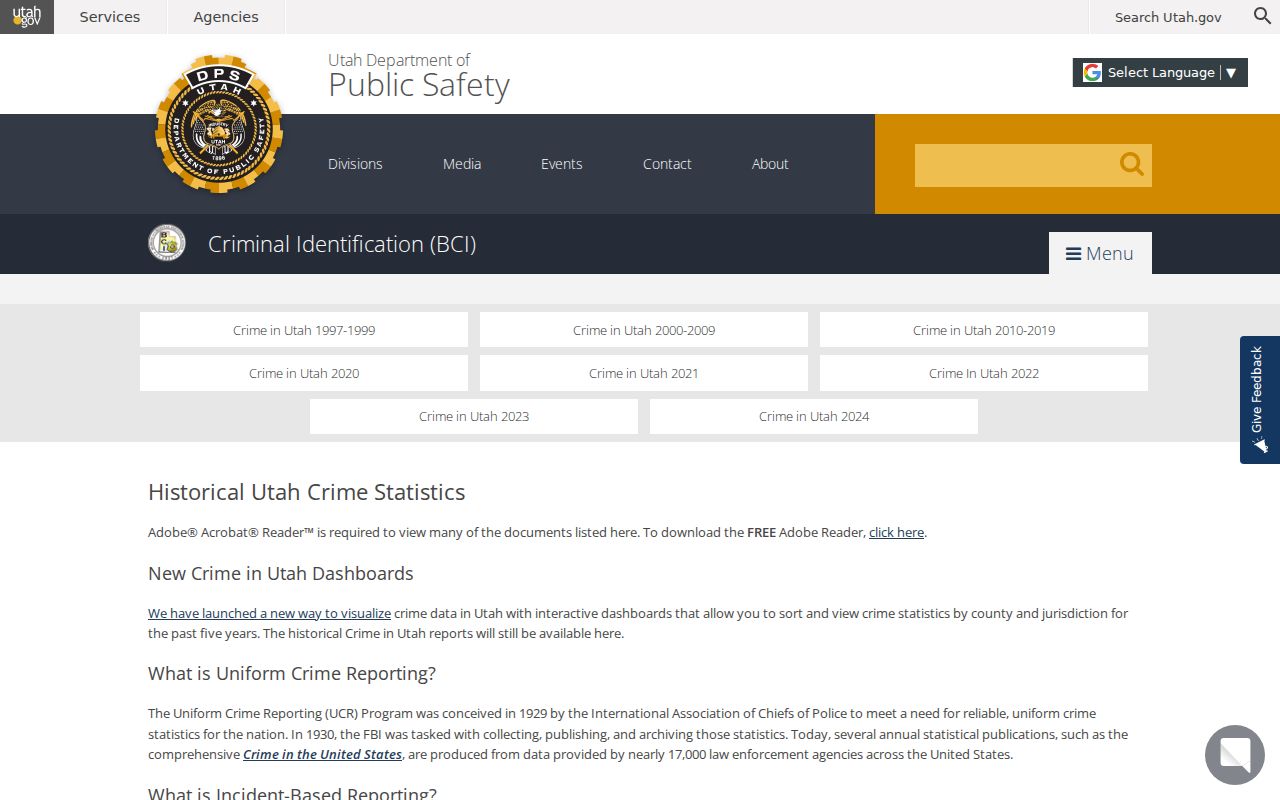
The report library offers context, not a list of people or individual Laketown cases. Use the sheriff and courts for an event-specific record.
Laketown Criminal Records Since 1864
Laketown dates to 1864. Its Pioneer Celebration and agricultural and recreation identity give town archives value for local history, but older criminal cases follow a different preservation line. Utah Archives' criminal guide covers First District and Rich County indexes and notes that long-term felony files may transfer after about fifty years. A thin electronic result can require a clerk or archive inquiry.
Historical sources can connect a name to town life, yet they do not prove an arrest, charge, or conviction. For that, seek the original docket, filed order, or agency record. Public Xchange coverage and converted older data have limits, and sealed, expunged, juvenile, and other restricted cases do not appear like open files.
For genealogy, keep the record chain visible in notes. Record the archive or court, index title, file number, dates, and copy status. A reference in a local history book is context. A docket is evidence of a court action. A certified order is the best source for the legal outcome. This discipline is especially useful when several generations in Laketown share a surname.
Public Access Rules in Laketown
Utah's Government Records Access and Management Act applies classification and request rules to municipal and sheriff records. A Laketown town file or sheriff report may be public, private, controlled, or protected. Victim details, juvenile information, medical facts, active-investigation material, and security-sensitive records may be withheld or redacted. Court files follow the judicial branch's own access framework.
BCI criminal-history information has separate dissemination limits under Utah Code. GRAMA does not create a public name search for another person's Utah rap sheet. A strong Laketown request names the custodian, event, date range, record type, and delivery format. If the office denies access, keep the written classification and appeal notice.
Key Statutes:
Utah GRAMA, Title 63G Chapter 2 sets public-record classifications, request steps, fees, and appeals.
Utah Code §53-10-108 limits BCI criminal-history dissemination and preserves authorized subject access.
Utah court-record access rules govern judicial files and protect sealed, juvenile, and other nonpublic cases.